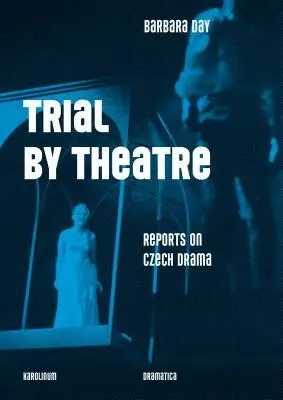
Trial by Theatre – Reports on Czech Drama (Barbara Day)
Stabilní cena
Cenu sledujeme od 11. 8. 2026 a zatím se drží na 290 Kč.
290 Kč
Karolinum
- Rychlé doručení
- Dostupnost skladem
Anglicky psaná kniha Barbary Day o českém divadle: „Národ sobě“, obrození, divadelní jazyk alegorií a meziválečná avantgarda. Vydalo Karolinum. Celý popis
Do obchoduO produktu
Anglicky psaná kniha Barbary Day o českém divadle a jeho výjimečné roli v národních dějinách. Motto „Národ sobě“ nad oponou Národního divadla symbolizuje, jak zásadní místo divadlo u Čechů zaujímá.
Během národního obrození 19. století zastoupilo divadlo politiku a stalo se nástrojem národní identity. V německy mluvícím mocnářství si Češi vytvořili složitý divadelní jazyk plný alegorie, narážek, her a hudby; mezi válkami pak v Československu rozkvetlo avantgardní divadlo jako symbol nezávislosti. Vydalo nakladatelství Karolinum.
Tip: Podívejte se také na další produkty z kategorie ebook.
Časté otázky
Čemu se kniha Trial by Theatre věnuje?
Dějinám českého divadla a jeho roli coby nástroje národní identity — od obrození 19. století po meziválečnou avantgardu. Kniha je psaná anglicky.
Proč mělo divadlo pro Čechy takový význam?
Za národního obrození zastoupilo politiku a stalo se nástrojem národní identity; Češi si vytvořili divadelní jazyk plný alegorie a narážek.
Vývoj ceny
Podobné produkty
Popis výrobce
Trial by Theatre - Reports on Czech Drama - Barbara Day
The motto Národ sobě – “From the Nation to Itself” – inscribed over the proscenium arch of Prague’s National Theatre symbolizes the importance theatre holds for the Czechs. During the National Awakening of the 19th century, theatre took the place of politics, becoming an instrument of national identity in the hands of the revivalists. In what was then part of a German-speaking empire, the Czechs devised a complex and evocative theatre language made up of allegory, allusion, juxtaposition, games, wordplay, legend, history, illusion and music. A sophisticated avant-garde theatre flowered in Czechoslovakia between the wars, and became a symbol of independence during the Nazi occupation. It survived Socialist Realism and Stalinism to blossom again in the “Golden Sixties” when Prague became “the theatre capital of Europe” (Kenneth Tynan) and a generation of theatre and film directors (Radok, Grossman, Schorm) and playwrights (Havel, Kundera, Topol) were at the forefront of the Prague Spring. Reprisals took place after the 1968 Soviet invasion when, under “normalization,” hardline Communists tried to silence the voices of the ‘60s; thousands were forced into internal and external emigration. The theatre culture, however, flexible and experienced from previous repression, again provided a basis of opposition to totalitarianism. For two decades it operated in the provisional spaces of culture houses, studios, gymnasiums, bars, trade union halls, art galleries and living rooms. Strategies were devised and implemented to bring freedom back to the theatre and society. A strong sense of justice and ethics intensified the mutual commitment of theatres and audiences, leading the way to the Velvet Revolution of 1989 and the installation of a playwright as President.
Specifikace
- jazyk
- en
Recenze
Recenze u nás zatím nikdo nenapsal — budete první? Zkusit můžete recenze u partnerských obchodů — dostanete se k nim přes sekci Srovnání cen.